Why You Feel “Less Attractive” Right Before Your Period
Dec 11, 2025
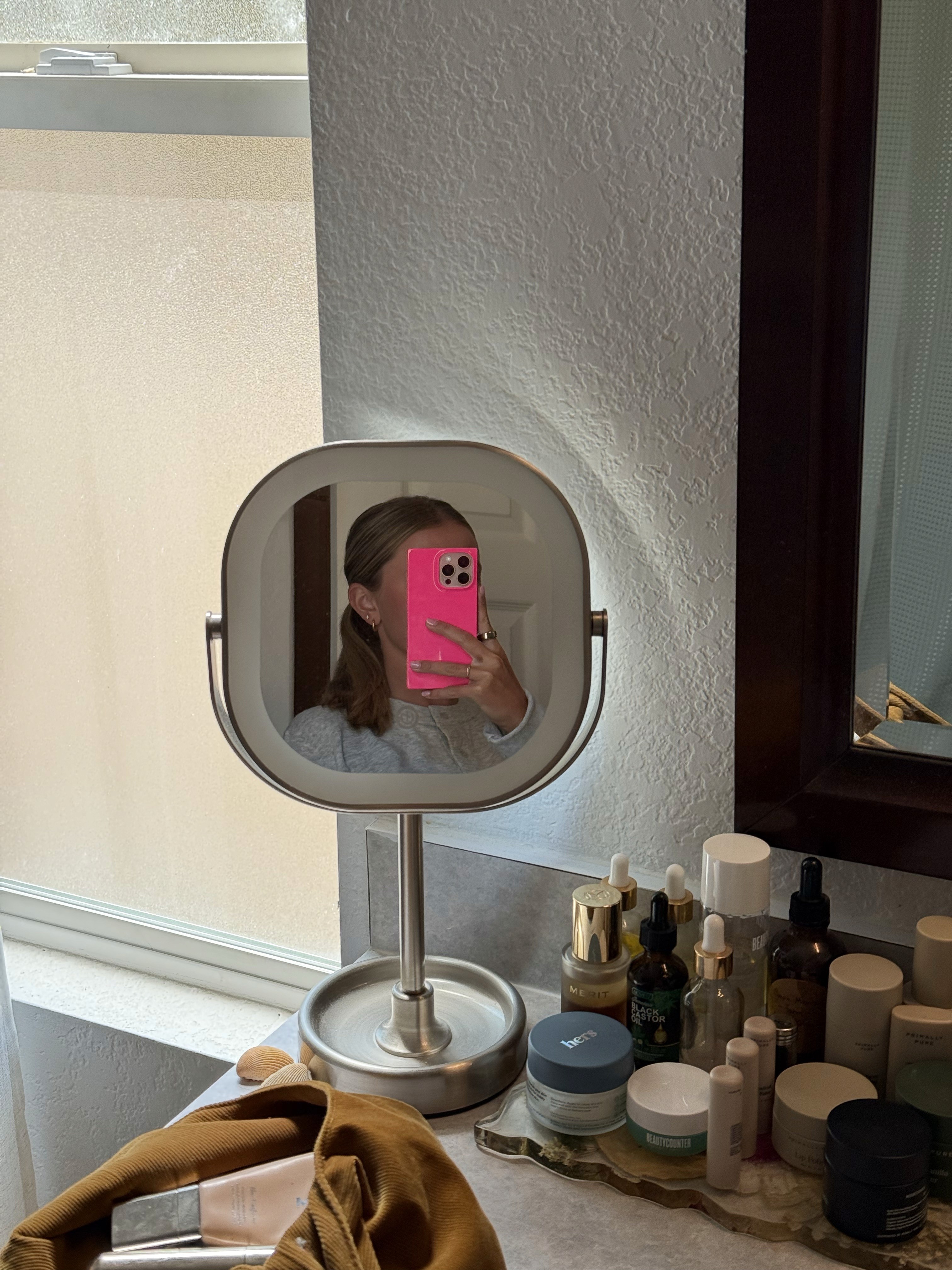
If you ever look in the mirror right before your period and think… something’s off, you’re not imagining the feeling. But you are misinterpreting it, let's work together on reframing that view, with science!
That dip in self-image isn’t proof you’re suddenly less beautiful.
It’s a mix of small, totally normal physiological shifts, plus the emotional sensitivity of the luteal phase.
Your looks change a tiny bit. Your perception changes a lot. Let’s talk about both.
💛 Yes, Your Face Shifts Slightly: But Not in a “Worse” Way
Here’s the real science behind that “I look different” moment:
1. Water retention subtly changes facial contour
Progesterone can cause your body to hold onto a little more fluid.
This might make your face look:
a bit softer
a bit rounder
a bit less defined in the jaw or cheekbones
It’s not swelling, it’s just gentle fullness.
2. Your skin barrier is more sensitive
When estrogen drops, your skin:
retains less moisture
gets more reactive
may look slightly duller or textured
It’s not a “decline.” It’s simply your skin operating on low battery.
3. Micro-inflammation can increase
Your immune system is more active in this phase, which can cause:
a touch more redness
a breakout or two
slightly puffy under-eyes
Again, SUBTLY. Not dramatic.
4. Facial symmetry naturally fluctuates across the cycle
During ovulation, estrogen improves facial symmetry (which our brain interprets as attractiveness).
In the luteal phase, that boost fades.
But it’s temporary. And honestly?
No one but you notices.
🌿 But Here’s the Wild Part: Your Feelings Exaggerate the Changes
The science is real: your face does shift in tiny ways.
But the meaning you assign to those shifts is where the distortion happens.
During the luteal phase:
estrogen drops → lower serotonin → more negative filtering
progesterone rises → more sensitivity + irritability
stress hormones increase → you notice every micro-flaw
your brain’s “threat detection” system is more active
So instead of: “Oh, I look a little tired today.”
It becomes: “Why do I look awful? When did this happen? What’s wrong with me?”
Same face. Different lens.
It’s not your appearance that’s changing drastically, it’s your interpretation of it.
✨ You’re Seeing Yourself Through a More Fragile Filter
Right before your period, your brain:
focuses more on imperfections
remembers criticism more vividly
feels more self-conscious
reacts more emotionally to your reflection
This isn’t insecurity, it’s neurobiology.
Your body is shifting into its protective mode, and part of that is scanning for anything that feels “off,” including in your appearance.
You’re not less beautiful.
You’re just more sensitive to yourself.
🌸 This Isn’t the Week for Harsh Mirrors, It’s the Week for Softness
When your system is tender, your reflection needs to feel safe, not judged.
Try:
warm lighting
skin rituals that feel comforting, not corrective
cozy clothes
gentle hydration
slower mornings
less screen time
a soft internal tone —> be nice to yourself essentially
You don’t need a reinvention.
You need a reset.
💫 Your Beauty Didn’t Disappear, Your Ovulation Glow Just Passed the Baton
Ovulation gives you:
peak estrogen → brighter skin, more symmetry, higher collagen, increased circulation
testosterone → a more sculpted facial look
hydration → smoother texture
sensory openness → you feel more confident
When those peak hormones drop, you return to baseline, not “worse,” just different.
You’re comparing your luteal face to your ovulation face.
Two valid, beautiful versions of you.
Neither is the “right” one.
Be gentle with your reflection. Your beauty isn’t going anywhere, even if your hormones temporarily make it harder to see.
Phase: Luteal Phase (PMS window)
Hormones: Falling estrogen, high progesterone
Common Symptoms: Body image dips, puffiness, dullness, breakouts, lower confidence
Focus: PMS perception shifts, subtle physical changes, emotional interpretation
Why it happens: Hormonal shifts affect water retention, skin barrier, micro-inflammation + neurochemistry, leading to altered perception rather than true loss of attractiveness.